
There is one technique that "Real" DJs have that newer DJs often don’t. And it may be the most important skill you can have as a DJ.
You see, a truly great DJ isn’t just playing their set. The real killers are playing the room.
In fact, the longer you DJ, the less the job becomes about what you’re playing and the more it becomes about how you’re affecting the people in the room. How you’re shifting their energy. How you’re shaping the night. How you’re creating moments that burn themselves into memory.
But what exactly are experienced DJs sensing, how are they using this magic skill? And can you hone this hidden skill and lost art yourself?
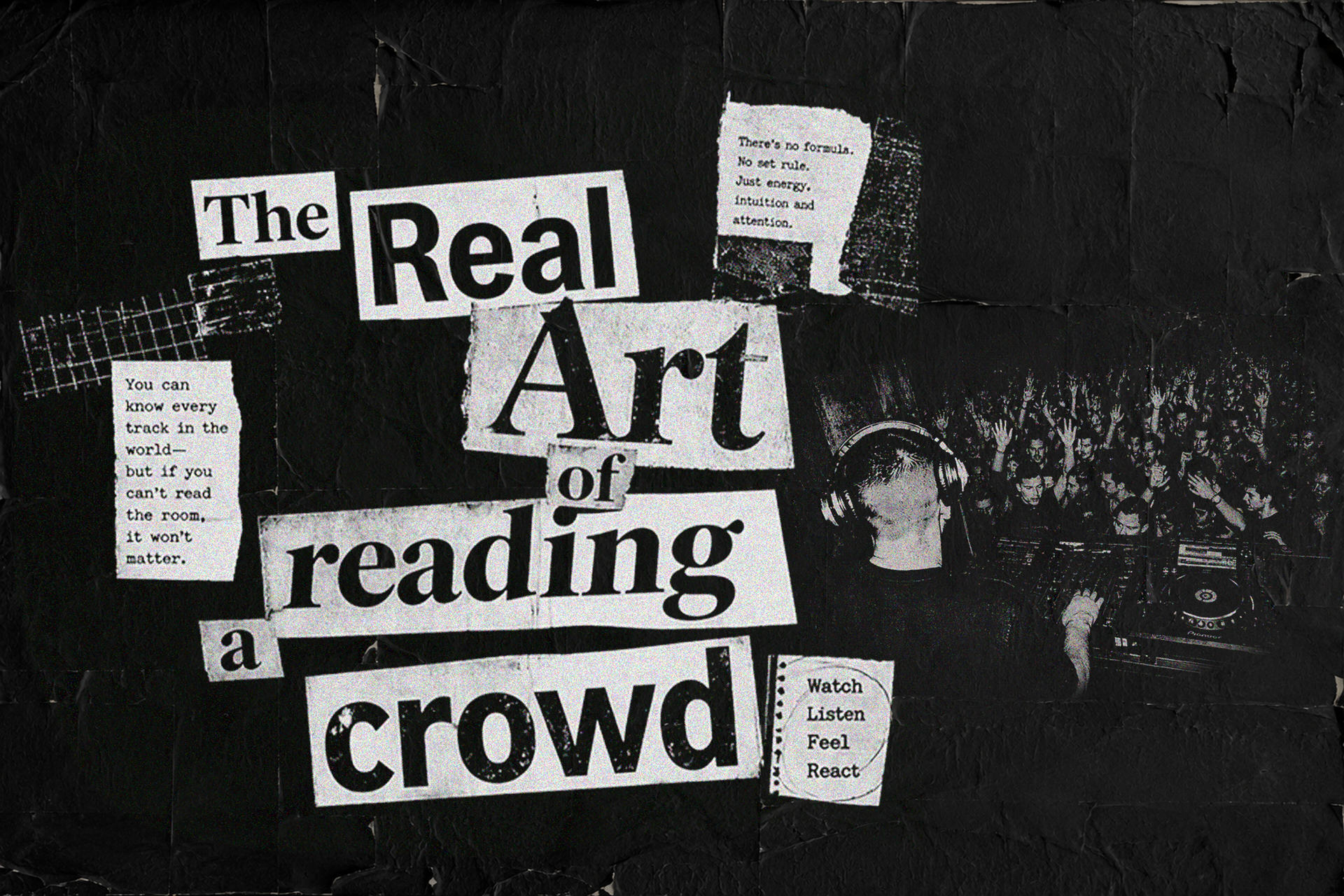
For any DJ that’s properly logged their 10,000 hours in bars, clubs, and venue there’s a skill that’s developed that has nothing to do with technical ability or song selection. It’s a feeling. A deep listening that occurs. Stand-Up comedians have it, theatre actors have it, live musicians have it… It’s a bond with a live audience. This lost art of reading a crowd Is part of what DJing is all about.
So often in the modern day DJs will build a set and regardless if a crowd is “feelin’ it” or not they are playing the set they prepared. While other more seasoned DJs who utilize reading the crowd will change their set based on the room. There’s a tennis match that happens with the audience. Sometimes the track is what the audience wants and sometimes it’s what the DJ wants. That journey is is defined by the collaboration between both.
Modern technology has made many aspects of DJing more accessible. Music libraries are larger than ever. Preparation tools are more sophisticated. Equipment offers capabilities that previous generations could only imagine. Yet technology cannot replace instinct. No software can fully replicate the ability to read a room, interpret its energy, and respond in real time.
But how can you develop this skill? This art form? Hone this instinct? Is it just about logging hours or is there a way to expedite learning? Before we look at how to hone this skill today, let’s go back. Instead of just selecting tracks and lining them up let’s look at where this curation art form began…
In the earliest days of modern club culture, DJs were beginning to discover that their role went far beyond simply choosing good records. Figures like Francis Grasso, David Mancuso, Nicky Siano, and later Larry Levan helped define a new kind of performance built around understanding the emotional state of the room. The goal was not to play the biggest song as quickly as possible, but to understand when the crowd was ready for it. A great DJ learned to recognize when energy was building, when people needed space, when familiarity would create connection, and when an unexpected record could completely change the direction of the night.
This transformed DJing into something closer to live storytelling. The crowd became an active part of the performance, constantly communicating through movement, attention, excitement, and tension. DJs responded to those signals in real time, shaping the night around what they were feeling from the room rather than following a rigid plan. In that sense, the art of reading a crowd became one of the foundations of DJ culture. The records were the tools, but the real skill was knowing how and when to use them.
Many DJs have experienced nights where everything appears successful from the outside. The room is full, people are moving, and the music sounds great. Yet something feels disconnected. In those moments, sticking rigidly to a plan can work against the experience. The strongest decisions often come from instinct. A track may need more time to breathe. The energy may need to be pulled back instead of pushed forward. These are rarely technical decisions. They are emotional ones.
There’s a reason Stand-Up Comedians work out their material in clubs with live audiences. They aren’t changing the material as much as they are playing with energy. They ask “What happens with the audience when I do this?” They want to ask this question and try multiple tests in different rooms with different audiences to find consistencies.
You can do these same kind of experiments in your sets. These tactics can help develop your crowd reading ability further. Observe the audience as much as you can…
Pay attention to groups, not individuals. One person leaving the floor means nothing. A whole section disengaging at once means something.
Stop planning every track. Prepare options instead of a fixed sequence. Give yourself multiple directions you can take depending on what the room tells you. Play longer sets. A four-hour bar or club set will teach crowd reading faster than a tightly scripted 45-minute festival set because you have to respond to multiple changes in the room. In a bar or a club you’ll need to understand the flow of the crowd. People arriving and people leaving. All of the moments require a different mood and soundtrack.
Review your sets afterward. Ask yourself where the crowd peaked, where you lost them, and what if anything recovered the room. This is almost like watching post game footage for sports.
And finally
Look up more. Don’t spend the entire set staring at waveforms, playlists, and equipment. Dance with the people, watch their faces, movement, body language, and how quickly people respond. DJing is part curation and part social experiments.
At the end of the day, reading a crowd is about becoming more present. The best “Real” DJs aren’t simply standing behind the booth asking themselves what track comes next. They feel the room like a surfer feeling the water of the ocean. They are testing ideas, watching what happens, and adjusting in real time. That exchange is what makes DJing a live art form in the first place. You can prepare and organize the music, practice the transitions, and plan the moments, but once people walk into the room, the set no longer belongs entirely to you. It becomes a collaboration between the DJ and the audience. And the better you become at listening to that audiencem the better you become at the actual art of DJing.
What do you think? Is this a lost art? Do DJs care anymore?