
A great DJ doesn’t just play music. At least, not in the way most people think. Anyone can line up tracks and press play. Anyone can fill a room with sound. But turning emotion into sound is something else entirely. It is something you feel before you even understand it.
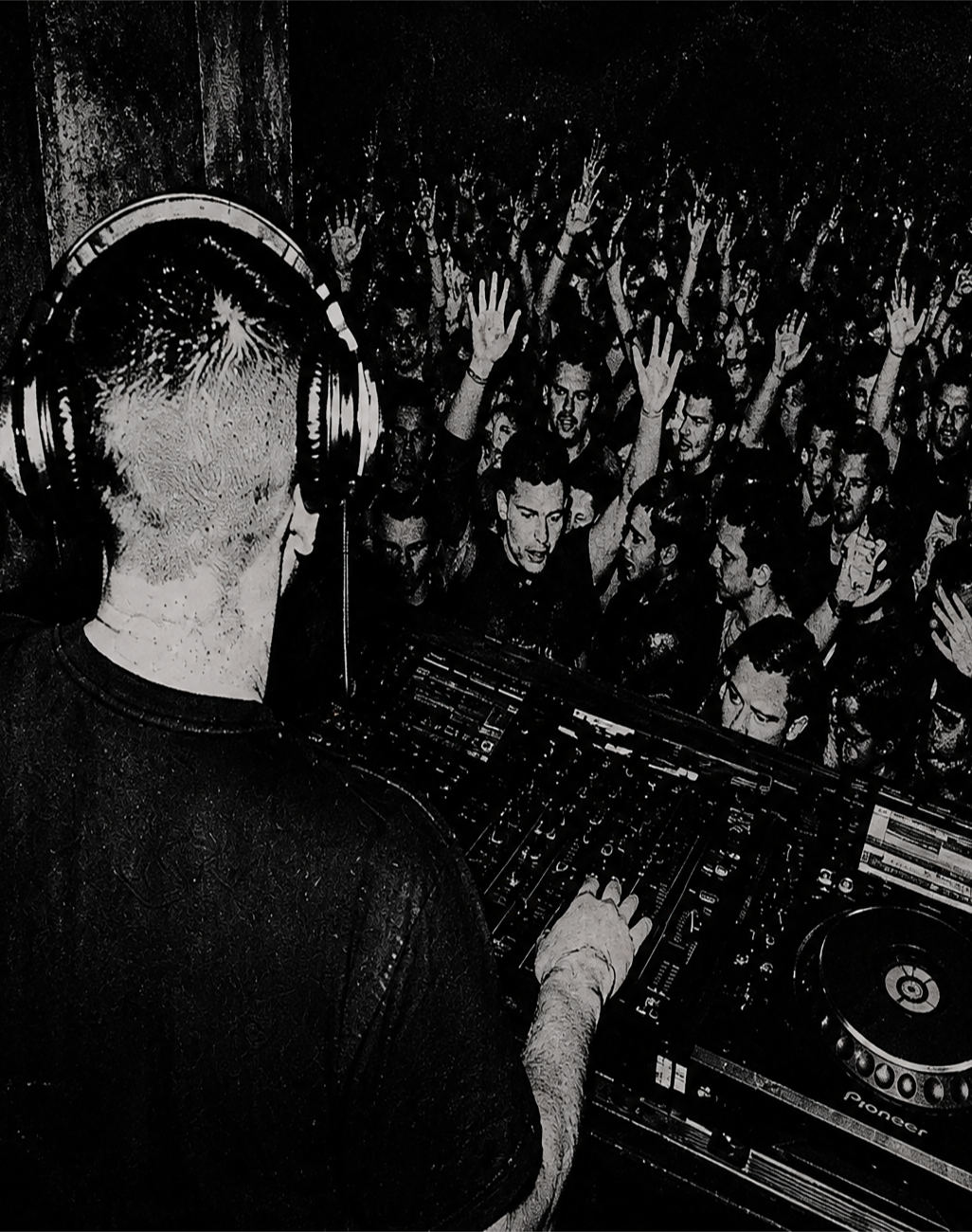
When you are standing behind the decks, you start to realize that the music is only part of what is happening. The real work is in the connection. There is an invisible thread between you and the crowd, and when it is strong, everything changes. You can feel it in the way people move, in the way they look at each other, even in the way they pause between moments. Lights can be perfect. The system can be loud and clean. None of that matters if you cannot feel the room breathing with you.
Reading a crowd is not about watching who is dancing and who is not. It is deeper than that. It is about sensing energy before it fully reveals itself. There are moments when the room is about to shift and you can feel it building under the surface. A slight restlessness. A growing excitement. Sometimes even a kind of tension that needs to be released. If you miss that moment, the energy can fall flat. If you catch it, you can take the entire room somewhere unforgettable.
I remember nights where everything looked right on the surface, but something felt off. The crowd was moving, but not connected. That is when you have to trust your instinct and not just your playlist. You change direction. You take a risk. Maybe you pull back instead of pushing forward. Maybe you let a track breathe longer than you planned. Those decisions are not technical. They are emotional. And they are what separate a set that works from a set that stays with people.
Click to Read More.
Every crowd is different. That’s one of the first lessons you really learn once you have played enough rooms. Some crowds want chaos. They want to lose themselves completely and feel overwhelmed in the best way. Others are looking for escape. They want to drift somewhere softer, somewhere that feels like a break from everything outside. Then there are crowds that are searching for connection, even if they don’t realize it. They want to feel part of something, even if they came in alone.
Your job is to recognize that without anyone telling you. No one is going to hand you instructions. There is no perfect formula. You walk into a room, you start playing, and you listen just as much as you perform. The crowd is always speaking. Not with words, but with energy. And if you pay attention, they will tell you exactly what they need.
There is a moment that happens sometimes, and it is hard to explain unless you have felt it. One track comes in at exactly the right time. The room locks in. People who were strangers a few minutes ago are suddenly moving together like they planned it. The energy lifts and spreads. It feels like the entire space is breathing as one. That’s the moment every DJ chases, whether they admit it or not.
Anyone can play popular songs. That has never been the challenge. The challenge is knowing when to play them, or when not to. Sometimes the obvious choice is the wrong one. Sometimes the crowd needs something unexpected. Something that shifts their mood instead of matching it. That takes patience. It takes restraint. And it takes a level of emotional awareness that you cannot fake.
There have been nights where the best decision I made was to slow everything down. Not because the energy was low, but because it was too high in the wrong way. You can feel when a room is close to burning out. If you keep pushing, you lose them. But if you pull back just enough, if you give them space to breathe, you create a new kind of anticipation. And when you bring it back up, it hits even harder.
That’s the part people don’t always see. They see the drops. They see the reactions. They do not always see the control behind it. Guiding a room isn’t about chasing every reaction. It’s about shaping the experience over time. You are building something, moment by moment, track by track.
The best DJs move like storytellers. There’s a beginning, even if it’s subtle. There’s a build, where things start to take shape. There are moments of release, where everything comes together. And there are surprises that keep people engaged and present. A good set feels like a journey, even if no one in the room could explain it out loud.
Technology has made a lot of things easier. Mixing is cleaner. Access to music is endless. You can prepare more than ever before. But none of that replaces instinct. None of it replaces the ability to stand in a room, feel what is happening, and respond in real time. You cannot pre plan connection. You have to earn it in the moment.
People might forget the exact tracks you played. They might not remember the transitions or the technical details. But they will remember how they felt. They will remember that moment when something clicked. When the music felt like it understood them. When the room felt alive in a way that is hard to find anywhere else.
Those are the nights that stay with people. And those are the nights that stay with you too. Because you know it was not just about playing music. It was about creating something shared. Something that only existed in that space, at that time, with those people.
The DJs who leave a mark aren’t always the flashiest or the most technical. They are the ones who understand emotion. The ones who listen as much as they play. The ones who are willing to trust their instincts, even when it means going against what is expected.
In the end, that’s what this really is. It’s not about controlling a room. It’s about connecting with it. Shaping energy. Creating moments that people carry with them long after the night ends.
That’s when you know you aren’t just playing music anymore. You’re part of something bigger. And once you experience that, you never approach a set the same way again.